
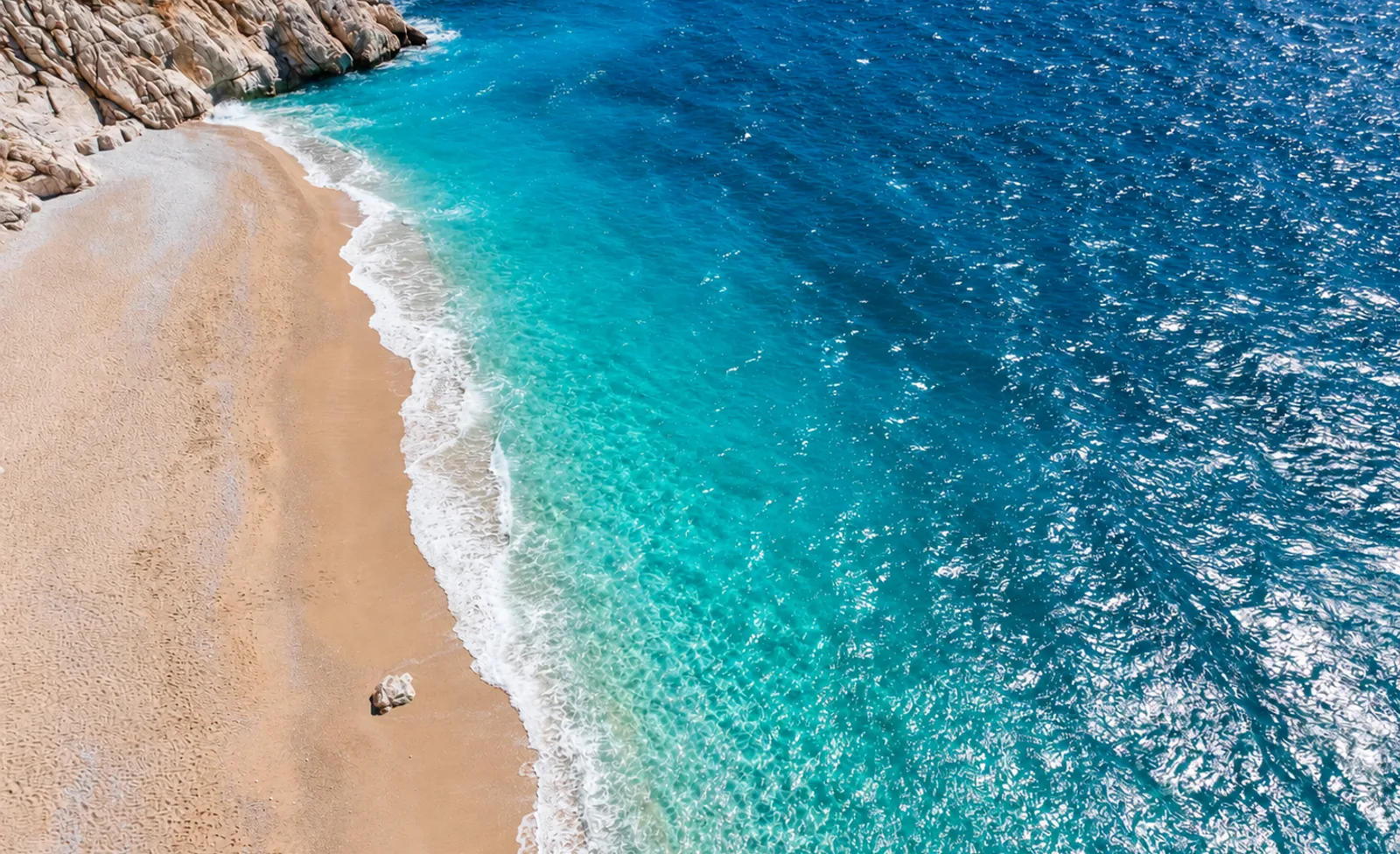
Kaputaş Beach, from our regional photography collection. Scene-setting image, rather than a photograph of every destination discussed in this guide.
The Art of Slow Travel
Slow travel is not really about moving slowly. It is about giving a place enough time to become more than scenery.
Turquoise Society · 7 min read
Published
Slow travel has acquired the language of a trend.
It probably shouldn’t have.
There is nothing particularly novel about remaining somewhere long enough to recognise the person who makes your coffee, returning to the same swimming place at a different hour, learning which road catches the evening sun, or deciding that a day does not need three attractions in order to have been well spent.
The more interesting idea is simply this:
Stay long enough for somewhere to stop performing for you.
The first few days are usually the obvious ones
Arrival encourages ambition.
There are places to see, restaurants saved on phones, archaeological sites, beaches, boats, walking routes and towns that looked irresistible when viewed from home.
The Turquoise Coast provides more than enough material.
The Lycian Way connects coastal and mountain landscapes with historic routes and ancient settlements across the peninsula. Patara, Xanthos, Antiphellos, Simena and other Lycian sites create another map entirely. The coast between Kaş and Kekova can be explored from the water; Kaş also has a strong diving identity.
Trying to consume all of that in a week is possible.
It is not necessarily the same as experiencing it.
A villa changes the tempo
Hotels naturally encourage us outward.
A villa can do the opposite.
There is a kitchen. A terrace. A pool. Perhaps a view that is different at seven in the morning from seven in the evening.
That changes the economics of attention.
Breakfast doesn’t need to be finished because somebody wants the table back. A swim does not have to be scheduled between excursions. Lunch can become an assembly of things bought that morning rather than another reservation.
You begin to notice the ordinary infrastructure of a place.
Where bread comes from. Which road people use when the main one is busy. How late the light remains on a particular hillside. Where people stop rather than where visitors are told to stop.
None of those experiences will make a conventional “ten things to do” list.
That is precisely why they matter.
Return somewhere twice
There is a simple rule that improves almost any holiday: go back.
Visit Kaş harbour once as a visitor and you notice the boats.
Return in the early morning and the same place is doing something else.
Walk through an archaeological site in the middle of a hot afternoon and you understand the monuments.
Return when the light is lower and you begin to understand the landscape around them.
Patara is a good example. The ancient city, former harbour, dunes and protected beach are geographically connected. Seeing them as separate attractions is convenient. Spending enough time to understand how they occupy one landscape is more rewarding.
Slow travel is often less about finding somewhere new than looking at somewhere familiar one more time.
Walk some of it
You don’t need to complete a long-distance trail for walking to change your relationship with a place.
The Lycian Way was developed through old paths and historic routes across the Teke Peninsula, passing through coastal and mountain environments and connecting numerous ancient places.
Walking makes distance legible.
A hill that looks insignificant on a map becomes real. An ancient harbour starts to make sense in relation to the ridge behind it. A village that appeared remote from the coast may reveal an old route that explains why it is there.
Even a short walk can replace the abstract geography of a holiday with something physical.
You remember places differently when you have reached them under your own power.
Leave room for weather
A perfectly optimised itinerary treats rain as failure.
A slower one simply changes shape.
A cloudy morning can become the reason to visit an ancient site rather than the beach.
Wind may make one bay less appealing and another part of the coast more interesting.
A very hot afternoon might be better spent nowhere more ambitious than beneath shade with a book.
The point is not to romanticise inconvenience.
It is to stop asking every hour of a holiday to justify itself.
Stay beyond the postcard
Tourism photography naturally concentrates on the spectacular.
Turquoise water. White boats. Sunset. Infinity pools. Bougainvillea.
They are real.
But they are incomplete.
The more enduring memory may be less dramatic: buying fruit, hearing cutlery from another terrace in the evening, the smell of herbs beside a path, a particular table, the first coffee in silence before everybody else wakes.
This is part of the reason Turquoise Society places so much emphasis on location rather than image alone.
The villa matters.
The landscape around it matters too.
And then, after a few days, the routines you build between them begin to matter most of all.
Do less, but choose well
Slow travel does not require abandoning boats, restaurants, ruins or beaches.
It simply removes the obligation to collect them.
Choose the things worth giving time to.
If you are interested in Lycian history, spend half a day somewhere rather than forty minutes everywhere.
If you enjoy the water, take a boat without turning the entire day into a checklist of coves.
If a restaurant is genuinely good, return.
If the terrace is the best place you have been all week, stay on it.
There is no prize for exhausting a destination.
The luxury of an unallocated day
Perhaps the rarest luxury in modern travel is not a private pool or a sea view.
It is waking up and discovering that nothing has been arranged.
No departure time. No reservation. No obligation to maximise the day.
That empty space creates possibility.
It is where a morning swim becomes lunch, lunch becomes reading, somebody suggests going into town, and you arrive somewhere without feeling that anything else has been sacrificed.
In a world increasingly built around optimisation, the freedom not to optimise is valuable.
The coast will still be there tomorrow.